Saturday 9 June 1900, Issue 10265 - Gale Document No. Y3200775991
THE EXMINSTER FATALITY - The Deputy Coroner (Mr A. Burrow) held an Inquest at Hooper's Farm, Exminster, on Thursday respecting the death of MRS MARY FLORENCE DOMMETT, wife of MR ROBERT HENRY DOMMETT, farmer, of Hooper's Farm. Mr William Heppell was chosen Foreman of the Jury. MR R. H. DOMMETT gave evidence of identification, and said his wife was 30 years of age. She went out in the pony trap on Tuesday about three o'clock with some of her children. The animal she was driving was a quiet one.
Georgina Irish, servant in the employ of the deceased, and who accompanied her and her four children in the trap, stated that whilst on the Kenn road the pony shied and dashed for an open gate. One of the wheels of the trap caught the gate post, and the vehicle was overturned, throwing its occupants into the roadway. Witness got up and picked the baby up and then the other children, but her mistress did not move. Augustus Crump, a farm labourer, who appeared on the scene just after the accident, deposed to seeing deceased lying in the hedge-row. He went for assistance. Dr C. J. Vlieland, of St. Thomas, stated that deceased's neck was broken, from which death ensued. The Deputy Coroner said the circumstances of deceased's death were exceedingly sad, and he was sure they all sympathised with MR DOMMETT and his family. The Jury returned a verdict of "Accidental Death."
Tuesday, 24 April 2018


Sunday, 22 April 2018
Thomas Fox
We know Thomas Fox met Jerome Vlieland .
from this quote :
The first Dutch Captain to arrive at Topsham he invited to Wellington. 'Give my best respects to Captain Vlieland,' he instructed the agent, 'and tell him I very much wish to see him here. He may come over from Exeter in the morning coach.' But Thomas was under no illusion that peace was likely to last; he knew that the ambitions of Napoleon Buonaparte were boundless and that there was a prospect of war for many years to come, with continual interruptions to continental trade.
a photo of a page from a wharfinger's journal from the port of Exeter, (Reference Devon Record Office a1/4) which shows the cargo of cloth on the Post van Topsham on its sailing for Rotterdam on 8 February 1791.
It shows the number of bales of cloth loaded aboard for that voyage, by each of the following merchants:
Weres & Co is the same as Thomas Fox of Wellington
James Pulling, Smales & Dennys, Benjamin Dickinson, John Besly, Messrs Dunsfords and George & William Lewis are all from Tiverton
Baring & Co are from Exeter.
It shows the number of bales of cloth loaded aboard for that voyage, by each of the following merchants:
Weres & Co is the same as Thomas Fox of Wellington
James Pulling, Smales & Dennys, Benjamin Dickinson, John Besly, Messrs Dunsfords and George & William Lewis are all from Tiverton
Baring & Co are from Exeter.

Born into a Cornish Quaker family with a rich heritage in the textile industry, it was almost inevitable that Thomas Fox would become an apprentice aged just 14 to his maternal grandfather, Thomas Were, a woollen merchant from Wellington in Somerset.
In 1796, aged 49, Thomas Fox took control of the family business in Wellington and renamed it Thomas Fox & Co. Despite a decline in the textile industry at the time, he had plans to improve the business and the machinery it used. It was his idea to purchase the Coldharbour Mill site in Devon and build a new factory there.
Thomas married Sarah Smith and they had 15 children. Six of their seven sons joined their father in the family business, which then became known as Fox Brothers & Co, and continued to expand the company. It became one of the largest textile businesses in Britain by the late 19th century, employing about 5000 people
As part of a Quaker family, Thomas Fox believed in looking after people. He built a steady workforce, and different generations of the same families worked together at his mills. One of his notable acts was that he would not employ children younger than 8 years old, even though other companies employed children as young as 4.
He also acquired around 70 cottages near Coldharbour Mill to provide reasonably priced accommodation for his workers and established a “Working Men’s Institute” in Uffculme for “Recreation and Improvement” which still exists today.
Five generations later, several descendants of the Fox family still live in Wellington, with the house that Thomas Fox and Sara built still in the family’s possession.
The Fox family withdrew from the Fox Brothers company in the late 20th century, but following the successful involvement of local investor Deborah Meaden, the brand name lives on today weaving for some of the worlds leading luxury brands. www.foxflannel.com/
Sunday, 15 April 2018
topsham
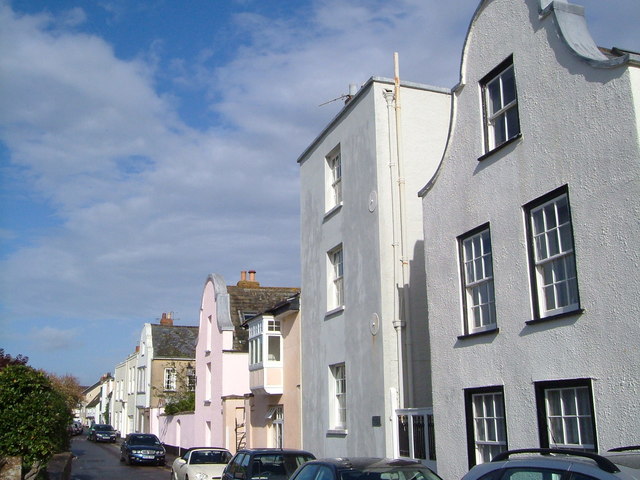
There are many Dutch style houses in Topsham dating from the time when Topsham was an important cotton port. Many of Topsham's houses are built using Dutch bricks, which were brought over as ballast from Holland – to where the wool and cotton from South-West England had been exported.
Tuesday, 10 April 2018

Friday, 6 April 2018
Samuel Athelstan White
"These days I tend to confine my research to the pre-1920s and I have found some wonderful material being amassed by family historians.
I have spotted the absorbing history of Samuel Athelstan White, painstakingly compiled by his great grandnephew, who has kindly allowed me to summarise it.
Samuel was born on 27 August 1869 in Winchester, but the family soon moved to London and settled in Chesilton Road Fulham in the 1880s. The father, a supervisor for the Inland Revenue, died in 1886 leaving to each of his four children a house in Canterbury, the rents of which ensured their well-being.
The 1891 Census places the family in Waldemar Avenue Fulham. Samuel, who was over 5ft 10 inches and weighed 170 lbs, with a fair complexion and light brown hair, was working as a commercial clerk but clearly fancied a more active life. He headed for Canada, like many young Britons of the day, and became a trapper and a hunter.
When the Boer War started and Lord Strathcona raised a cavalry regiment at his own expense, Samuel signed on and sailed with the regiment to Africa on the 18 March 1900. He saw plenty of action over the next two years, though he spent his leave visiting his mother who had settled in Putney.
He received his medal from the hands of the new monarch Edward VII, but as his great grandnephew comments, ‘despite any heroism Samuel was out of a job’.
The First World War prompted his return to arms though he was in his mid-40s. Between 1915 and 1921 he rose from being a private in the Rough Riders (City of London Yeomanry) to 2nd lieutenant in the Royal Field Artillery. He survived both World Wars and died in the (now defunct) West London Hospital, just off Hammersmith Broadway, on 6 October 1945."

Did the Whites fans lead the chimes 100+ years ago?
3 April 20180 Comments
BLOG
Craven Cottage

Morgan Phillips
By Morgan Phillips
On Good Friday up at Norwich the home team brought out the best in keeper Marcus Bettinelli, and it was not until the last half hour that Fulham took control, with goals from Stefan Johansen and Tom Cairney.
Wolves and Cardiff won as well, so the play-offs still look the more likely outcome for the Whites.
Fulham fans should be delighted that Alex White is now the club’s official historian.
For more than 30 years he has been producing authoritative, scrupulously researched and highly readable volumes about Fulham FC, some in partnership with Dennis Turner. Since Dennis passed away, Alex has been the man to consult on all periods of the club’s history. Although he published a definitive book Fulham FC the Early Years in 2014, he is still finding fresh material from the club’s pre-Football League days.
I was particularly interested in a report that he sent me of a Southern League match played at Grays United in December 1902: “Fulham brought down a fine pack of supporters, who kept all together and made the echoes ring with PLAY UP FULHAM sung a la Big Ben.”

The earliest known drawing of a Fulham supporter (1891) shows him with a card saying ‘Play up Fulham’
When I first took an interest in football 70 years ago, the Westminster Chimes were used exclusively by Portsmouth supporters: “Play up Pompey. Pompey play up. Play up Pompey. Pompey play up.”
It is remarkable that Fulham fans were using a similar chant as far back as 1902. The earliest known drawing of a Fulham supporter (1891) shows him with a card saying ‘Play up Fulham’ on the front of his hat. Did the Westminster Chimes ring around the Half Moon ground in Putney where Fulham played before the move to Craven Cottage?
These days I tend to confine my research to the pre-1920s and I have found some wonderful material being amassed by family historians.
I have spotted the absorbing history of Samuel Athelstan White, painstakingly compiled by his great grandnephew, who has kindly allowed me to summarise it. Samuel was born on 27 August 1869 in Winchester, but the family soon moved to London and settled in Chesilton Road Fulham in the 1880s. The father, a supervisor for the Inland Revenue, died in 1886 leaving to each of his four children a house in Canterbury, the rents of which ensured their well-being.
The 1891 Census places the family in Waldemar Avenue Fulham. Samuel, who was over 5ft 10 inches and weighed 170 lbs, with a fair complexion and light brown hair, was working as a commercial clerk but clearly fancied a more active life. He headed for Canada, like many young Britons of the day, and became a trapper and a hunter.
When the Boer War started and Lord Strathcona raised a cavalry regiment at his own expense, Samuel signed on and sailed with the regiment to Africa on the 18 March 1900. He saw plenty of action over the next two years, though he spent his leave visiting his mother who had settled in Putney.
He received his medal from the hands of the new monarch Edward VII, but as his great grandnephew comments, ‘despite any heroism Samuel was out of a job’.
The First World War prompted his return to arms though he was in his mid-40s. Between 1915 and 1921 he rose from being a private in the Rough Riders (City of London Yeomanry) to 2nd lieutenant in the Royal Field Artillery. He survived both World Wars and died in the (now defunct) West London Hospital, just off Hammersmith Broadway, on 6 October 1945.
I have included Samuel in this blog because an SA White played for Fulham St Andrew’s 3rd XI in the Autumn of 1889 just before the club shortened its name to Fulham FC.
This coincides with Samuel’s residence in the district and no other member of the team is listed with two initials. Samuel was surely proud of his middle name, which he also used in order to distinguish himself from his father Samuel E White.
I do not suppose the teenager had any footballing ambitions (most of the others eventually made it to the first team) but I am sure he enjoyed the camaraderie, and I have few doubts that the 3rd XI right-back later became a Rough Rider.
Finally, until next January the National Portrait Gallery is devoting its first-floor screen to some excellent pictures of Bobby Moore.
Most attention has been paid to Terry O’Neill’s chess match between Bobby and Franz Beckenbauer, but Whites fans will also appreciate Fulham’s semi-final squad from 1975 in celebratory mood, a great picture taken by Les Strong.
The views expressed in this blog are those of the author and unless specifically stated are not necessarily those of Hammersmith & Fulham Council.
By sending us a comment, you are agreeing to our publishing policy.
Friday, 30 March 2018
Jeroen Vlieland chronologically
a chronological list of the known facts of Jeroen Vlieland.
JEROEN AND HIS SHIPS
year
| event |
04/12/1742
|
Ariaantje Claas Mooijekind bapt witness.Cornelis Pieters and Geertje Cornelis.
|
04/02/1745
|
Jeroen born Noordwijk witness Jan Jeroense /Neeltje Pouwens.
|
20/02/1768
6/3/1768
13/5/1768
|
Banns Jeroen Vlieland and Ariaantje Klaas Mooiekind
Marriage Jeroen en Ariaantje
birth daughter Maartje witness:Pieternelletje Vlieland and Jan Alders Vlieland
|
17/3/1770
|
birth daughter Maartje witness Cornelis Mooienkind en Lijbje Mooienkind.
|
30/04/1773
|
death daughter Maartje
|
25/11/1775
6/12/1775
|
Bapt. Maartje witness Hendrik Alderts Vlieland and Feitje Aldertsz Vlieland(his brother and sister )
death daughter Maartje
|
27/3/1777
|
Daughter Maartje bapt witnessJan Gijs Zonneveld and Japie Claas Mooijekind
|
18/10/1878
|
Baptism son Arie withness Hendrik Aldertsz and Marijtje Cornelis Arishoek
|
26/11/1781
|
sailed for Oostende
|
27/12/1784
|
to St Valery from Rotterdam
|
21/04/1785
15/8/1785
|
waiting for cargo to Topsham ship Maria
First trip Jeroen to Topsham with Jonge Maria owned by Brown and co.
|
7/9/1786
12/10 1786
21/12/1786
|
Jeroen from Topsham to Maassluis
from Rotterdam to Topsham.
from Rotterdam to Topsham
|
26-02-1788
25/8/1788`
|
Jeroen from Rotterdam to Topsham
last will and testament notary Hoogop.
|
04/02/1790-11/02/1790
27/4/1790
27/4/1790
4/5/1790-8/5/1790
22/5/1790
|
Jeroen from Rotterdam to Topsham
Arrived in Topsham
waiting for cargo in Topsham
waiting for cargo in Topsham
sailed from Topsham
|
8/2/1791
22/2/1791
5/7/1791
|
Arrival in Topsham with cargo of clothes and wool
Arriving in de Maas from Topsham
W?Vlieland van Topsham
|
9/2/1792
22/3/1792
24/7/1792
|
J.Vlieland fromTopsham
from Topsham
from Topsham
|
7/5/1793
17/12/1793
|
In de maas from Topsham
from Topsham
|
1/4/1794
11/11/1794
|
In Pool the Post of Topsham
wainting for cargo in Topsham for Rotterdam
|
1795
13-3-1795
22/3/1795
27/3/1795
|
because of the severe winter and the war the ship was in Topsham for the whole year is in the archives
from Topsham empty de Post
His wife Ariaantje Claas died
Ariaantje Claas buried
|
2/8/1796
|
Jeroen gives permission at the office of notary Beijerman in Rotterdam for the wedding of Maartje
|
1797
|
List of guards of Noordwijk
|
29/12/1798
|
birth of grandchild Anna Jacobsd Vink
|
4/2/1802
20/5/1802
22/5/1802
1/6/1802
19/6/1802
2/12/1802
| cargo of rugs ,cheese and hoops at auction in Perth
Waiting for cargo" the post of Topsham" in Rotterdam
sailed for Topsham
Naar Topsham met de post of Topsham
Naar Topsham met de post of Topsham
Van Topsham
|
21/02/1803
1/3/1803 tot 24/3/1803
22/3/1803
24/3/1803
02/4/1803
07/4//1803
14/4/1803
21/04/1803
28/4/1803
07/5/1803
|
Witness at the baptism together with Catharina Janszen at his brother Willem and Mietje child is named Petrus Vlieland in Maassluis.
waiting for cargo for Topsham in Rotterdam
sailed for Topsham
sailed for Topshamsailed for Topsham sailed for Topsham sailed for Topsham waiting for cargo arrived from Topsham in the maas |
26/4/1805
|
Southampton auction of bacon, cargo of Jeroen from Rotterdam
|
12/3/1807
|
Jeroen receives a certificate from the king to sail to Tonningen with the ship Beatrix
|
02/5/1810
|
Delayed by frost , he claims waiting days in Embden Allthough he really was bound for London with the ship Beatrix.
|
11/9/1811tot 17/9/1811
|
For sale the ship L `Esperance in Rotterdam last master Jeroen Vlieland
|
4/9/1831
|
Son Ary died Rotterdam
|
1/4/1862
|
Maartje died Bruge Belgium.
|
jaartal
|
gebeurtenis
|
04/12/1742
|
Ariaantje Claas Mooijekind geboren.Get.Cornelis Pieters en Geertje Cornelis.
|
04/02/1745
|
Jeroen Geboren te Noordwijk get Jan Jeroense /Neeltje Pouwens.
|
20/02/1768
6/3/1768
13/5/1768
|
Ondertrouw Jeroen Vlieland met Ariaantje Klaas Mooiekind
Huwelijk van Jeroen en Ariaantje
Geboorte Maartje getuigen :Pieternelletje Vlieland en J an Alders Vlieland
|
17/3/1770
|
Geboorte dochter Maartje Get Cornelis Mooienkind en Lijbje Mooienkind.
|
30/04/1773
|
Overlijden dochter Maartje
|
25/11/1775
6/12/1775
|
Doop dochter Maartje getuigen Hendrik Alderts Vlieland en Feitje Aldertsz Vlieland(zijn broer en zus )
Overlijden dochter Maartje
|
27/3/1777
|
Dochter Maartje gedoopt getuigen Jan Gijs Zonneveld en Japie Claas Mooijekind
|
18/10/1878
|
Doop zoon Arie getuigen Hendrik Aldertsz en Marijtje Cornelis Arishoek
|
26/11/1781
|
Uitgezeild naar Oostende
|
27/12/1784
|
Naar St Valery van Rotterdam
|
21/04/1785
15/8/1785
|
Ligt in lading voor Topsham de Maria
Eerste reis van Jeroen naar Topsham met de Jonge Maria eigendom van Brown en co.
|
7/9/1786
12/10 1786
21/12/1786
|
Jeroen van Topsham naar Maassluis
Van Rotterdam naar Topsham.
Van Rotterdam naar Topsham
|
26-02-1788
25/8/1788`
|
Jeroen van Rotterdam naar Topsham
Testament opgemaakt bij notaris Hoogop.
|
04/02/1790-11/02/1790
27/4/1790
27/4/1790
4/5/1790-8/5/1790
22/5/1790
|
Jeroen van Rotterdam naar Topsham
Aangekomen vanuit Topsham
Ligt in lading voor Topsham
Ligt in lading voor Topsham
Uitgezeild naar Topsham
|
8/2/1791
22/2/1791
5/7/1791
|
Aankomst Topsham met balen kleren
Arriveerde in de Maas van Topsham
W?Vlieland van Topsham
|
9/2/1792
22/3/1792
24/7/1792
|
J.Vlieland van Topsham
Van Topsham
Van Topsham
|
7/5/1793
17/12/1793
|
In de maas vanuit Topsham
Van Topsham
|
1/4/1794
11/11/1794
|
In Pool de Post of Topsham
Ligt in Topsham in lading voor Rotterdam
|
1795
13-3-1795
22/3/1795
27/3/1795
|
Door het uitbreken van de oorlog en de strenge winter ligt het schip volgens de archieven in Topsham tot 1796 vast in Topsham
Komt van Topsham ledig de Post
Ariaantje Claas overleden .
Ariaantje Claas begraven.
|
2/8/1796
|
Jeroen geeft bij notaris Beijerman toestemming voor huwelijk Maartje
|
1797
|
Staat op Lijst weerbare mannen Noordwijk
|
29/12/1798
|
Geboorte kleinkind Anna Jacobsd Vink
|
4/2/1802
20/5/1802
22/5/1802
1/6/1802
19/6/1802
2/12/1802
|
Lading matten ,kaas en hoepels veiling in Perth
Legt in lading the post of Topsham in Rotterdam
Uitgezeild naar Topsham
Naar Topsham met de post of Topsham
Naar Topsham met de post of Topsham
Van Topsham
|
21/02/1803
1/3/1803 tot 24/3/1803
22/3/1803
24/3/1803
02/4/1803
07/4//1803
14/4/1803
21/04/1803
28/4/1803
07/5/1803
|
Komt dopen met Catharina Janszen bij kind van broer Willem en Mietje genaamd Petrus Vlieland in Maassluis.
Ligt in lading voor Topsham in Rotterdam
Vertrokken naar Topsham
Vertrokken naar Topsham
Vertrokken naar Topsham
Vertrokken naar Topsham
Vertrokken naar Topsham
Ligt in lading voor Topsham
Vertrokken voor Topsham
In de maas binnengekomen van Topsham
|
26/4/1805
|
Southampton veiling van ham aangeleverd door Jeroen vanuit Rotterdam
|
12/3/1807
|
Jeroen krijgt een zeebrief voor uitreis naar Tonningen met de Beatrix
|
02/5/1810
|
Opgehouden door vorst zogenaamd op weg naar Embden maar het was London met het schip Beatrix.
|
11/9/1811tot 17/9/1811
|
Te koop aangeboden het schip L `Esperance in Rotterdam laatst gevoerd door Jeroen Vlieland
|
4/9/1831
|
Ary overleden Rotterdam
|
1/4/1862
|
Maartje overleden te Brugge
|
Sunday, 25 March 2018
Nicholas Vlieland in Ebury street.
Ebury Street, Belgravia 


an impression from Ebury street from an old postcard.
We know that Nicholas Vlieland, after the hit success of the two noir London stage plays A Night at an Inn (1931) and The Hangman (1935), was living at 115 Ebury Street in Belgravia.
Belgravia (the name for the streets around Belgrave Square) had been laid out in the 1820s at the commission of the Earl of Grosvenor by Thomas Cubitt, and named after Belgrave, the family’s estates in Leicestershire.
Originally a wheelwright from Norfolk, Cubitt rose to become an architect who built much of central-west London, and also the Kemp Town estate in Brighton where Barbara Vlieland Peel and Archie Graham lived.
The tall, flat-faced Georgian houses were brick with a cream stucco facing on the ground floor (wooden houses were forbidden to be built in London after the Great Fire of 1666), and attracted many of the great and good of the artistic world.
an impression from Ebury street from an old postcard.
At no. 42 in 1847 was Alfred Lord Tennyson, writing his poem Maud.
At nos. 57 and 61 in 1872 was the pioneer studio photographer William Downey, who enjoyed royal patronage and featured Sarah Bernhardt and Oscar Wilde among his subjects.
At no. 115 (to be Nicholas’ home 50 years’ later) in 1884 was the studio of the sculptor William Calder Marshall, who was famous for his statues of statesmen in the new Houses of Parliament, rebuilt after a catastrophic fire in 1834.
He was photographed at work in Ebury Street by Joseph Parkin Mayall, in his series of Artists at Home.
Before its development in the 1820s, the area that became Belgravia was known as Five Fields Row, a secluded rural settlement between The Kings Road and The Chelsea Road, with a few houses dotted among fields.
Its most famous early resident was the eight-year-old composer Wolfgang Amadeus Mozart, who lived with his family from August to September 1764 in what is now no. 180, while his father recuperated from illness and he wrote his first two symphonies.
By the 1930s, it was the hub of a literary, thespian and gay community, a precariously safe space when such relationships attracted a criminal penalty.
Harold Nicholson, the diplomat and diarist, who lived with his wife Vita Sackville-West at no. 182, called it ‘a rather stern and grim and quiet’ street; his wife entertained her lover, Violet Trefusis, under its roof.
Virginia Woolf did not live in the street, but in chapter ‘1913’ of her novel The Hours (1937), an old maidservant called Crosby lives in an attic room at the working-class end of the street near Victoria Station after she leaves service, and she thinks ‘the ladies and gentlemen’ whom she encountered had a ‘kind way with them’.
A minor character called Mrs Ebury also appears in Woolf’s last novel Between the Acts (1941).
At no. 111 was a lodging-house where the actor Noël Coward wrote his first play, The Vortex, in 1924.
With its hero a cocaine addict (a coded reference to his homosexuality), it pushed the boundaries of accepted morality and only just escaped being banned by the censor (until 1968, no play could appear without a licence from the Lord Chamberlain’s Office), and had to be produced out of the West End at the Everyman, a fringe theatre in north London.
No. 109 was the childhood home of the actress Edith Evans, whose family moved there when she was 2 and left when she was 24, just after her amateur stage début, as Viola in Twelfth Night.
(109, Ebury Street, London, Greater London SW1W 9QU
£3,900,000 Terraced, Freehold, Residential 26 May 2017)
The most notable modern resident, at no. 22, was Ian Fleming, the creator of James Bond. This is one of the oldest survivors of the original estate, a handsome porticoed house originally the non-conformist Pimlico Grammar School built in 1830 with a Latin inscription above the door praising the arts and literature.
(109, Ebury Street, London, Greater London SW1W 9QU
£3,900,000 Terraced, Freehold, Residential 26 May 2017)
The most notable modern resident, at no. 22, was Ian Fleming, the creator of James Bond. This is one of the oldest survivors of the original estate, a handsome porticoed house originally the non-conformist Pimlico Grammar School built in 1830 with a Latin inscription above the door praising the arts and literature.
In the 1930s it was divided into four flats and Ian Fleming moved into no. 22b around 1936. On 27 December 1940, the Southern Railway track behind Ebury Street was bombed in the London Blitz, but the worst damage occurred in the last major raid on London, on 10–11 May 1941 when, on a night of the full moon, 505 bombers crossed the channel.
The House of Commons and Westminster Abbey burned and the District Line tube line and many of the houses at the eastern end of the street were destroyed. In the postwar depression and financial austerity, rebuilding was slow and modern blocks of flats displaced the 1820s housing stock.
Barbara Vlieland Peel’s daughter, who used to catch the Greenline bus from Ebury Street to her University in Outer London in the mid 1960s, remembers it as grubby, shabby and rather sad.
Today, in a modern block with a concierge, a 2-bedroom flat markets at between £1.5 and £2.5 million.
Thanks Barbara!
Subscribe to:
Posts (Atom)