Edwina Amethyst White married for the second time and became Edwina Harley.
When she married in Palma to Colin Shelagh Harley born in 1929 in Staines Middlesex.
He died in Eastborn Sussex in 1990.
Edwina Harley was the first one to open an English pub in 1964 in Torremolinos
She named it The Gallopping Major.
And it is still there .
The song of the Galopping major
Edwina´s father is Samuel White, the son of Ethelbert and grandson of Samuel Ethelbert White and Catherine Veri Vlieland.
When she married in Palma to Colin Shelagh Harley born in 1929 in Staines Middlesex.
He died in Eastborn Sussex in 1990.
Edwina Harley was the first one to open an English pub in 1964 in Torremolinos
She named it The Gallopping Major.
And it is still there .
The song of the Galopping major
Edwina was the daughter of Samuel White and Charlotte M Carter.
Name: WHITE, Samuel
Registration District: Croydon County: Surrey
Year of Registration: 1926 Quarter of Registration: Oct-Nov-Dec
Spouse's name: Carter, Charlotte M
Volume No: 2A Page No: 809
Birth of daughter
Daughter: WHITE, Edwina A
Registration District: Marylebone County: London
Year of Registration: 1934 Quarter of Registration: Jan-Feb-Mar
Mother's Maiden Name: Carter
Volume No: 1A Page No: 606
Marriage of daughter Edwina White
Name: BODDY, Raymond M
Registration District: Surrey Northern County: Surrey
Year of Registration: 1951 Quarter of Registration: Jul-Aug-Sep
Spouse's name: White, Edwina A
Volume No: 5G Page No: 808
Raymond Marshall Boddy was born March 1929 as son of Gladyss Ellen Cato and James H.Boddy.He died 1983 Westminster
So there you have the Vlieland part of the name.
Name: WHITE, Samuel
Registration District: Croydon County: Surrey
Year of Registration: 1926 Quarter of Registration: Oct-Nov-Dec
Spouse's name: Carter, Charlotte M
Volume No: 2A Page No: 809
Birth of daughter
Daughter: WHITE, Edwina A
Registration District: Marylebone County: London
Year of Registration: 1934 Quarter of Registration: Jan-Feb-Mar
Mother's Maiden Name: Carter
Volume No: 1A Page No: 606
Marriage of daughter Edwina White
Name: BODDY, Raymond M
Registration District: Surrey Northern County: Surrey
Year of Registration: 1951 Quarter of Registration: Jul-Aug-Sep
Spouse's name: White, Edwina A
Volume No: 5G Page No: 808
Raymond Marshall Boddy was born March 1929 as son of Gladyss Ellen Cato and James H.Boddy.He died 1983 Westminster
So there you have the Vlieland part of the name.
Later her sons changed their name

But now you know who is who we start with her pub.
El major sigue galopando
now translated in google English we found this original Spanish article .
is all about Edwina White .
The major keeps galloping

FRANCISCO LANCHA
Saturday, December 18 2010, 02:41
In the golden age of the Costa del Sol, one of the most popular catering establishments in Torremolinos was on María Barrabino street. It was opened by Edwina Harley, in February 1964. We refer to the Galloping Major, a bar of drinks in the style of the old English pubs that have always ruled the British lands. Later, this bar would change ownership and would pass into the hands of Manuel Vega Trigo in 1980, a Ceuta born in 1946 and came to land in Torremolinos in 1963 to work as a waiter at the Panorama Hotel, an establishment that was located in Calle de las Mercedes, which goes down to the beach of Bajondillo, and a year later began working as a waiter in the Galloping Major.
Its location, as we said before, on María Barrabino street, made it rub shoulders with other important nightclubs such as El Dorado, Tina's Bar or restaurants like the black lantern, owned by a famous Swedish actor who would later become in consul of his country, and that became refuge of journalists and photographers who covered the events of the Costa del Sol. But of all these the only one still standing is the Galloping Major.
In the first trots of this establishment it was reaping great fame among the locals of Torremolinos, becoming so famous that it was frequented by members of the British royal family, as well as, a multitude of famous actors and musicians worldwide.
The atmosphere of the English pub is still maintained today, keeping the same structure and furniture with which it was opened. According to Manuel Vega, the pub has not closed even one day since its inauguration. The 'commander' has to support more riders, because Manuel Vega Trigo, has included members of his family in the payroll of the business, making this 'horse' have English skin but Spanish heart.
This corner of the old district of Malaga and now municipality of Torremolinos is part of one of the many historical places that it has, where the old town hall is located as well as the first market that was in Torremolinos and that was later transformed in municipal dependencies.
FRANCISCO LANCHASábado, 18 diciembre 2010, 02:41
En la época dorada de la Costa del Sol, uno de los establecimientos hosteleros más populares de Torremolinos se encontraba en la calle María Barrabino. Lo abrió Edwina Harley, en febrero de 1964. Nos referimos al Galloping Major, bar de copas al estilo de los viejos pub ingleses que han reinado desde siempre las tierras británicas. Más adelante, este bar cambiaría de dueño y pasaría a manos de Manuel Vega Trigo en el año 1980, un ceutí nacido en 1946 y que llegó a tierras torremolinenses en el año 1963 para trabajar como camarero en el hotel Panorama, establecimiento que se encontraba en la calle de las Mercedes, vía que baja hasta la playa del Bajondillo, y que un año más tarde comenzaría a trabajar como camarero en el Galloping Major.
Su ubicación, como ya dijimos antes, en la calle María Barrabino, hizo que se codeara con otras importantes salas de fiestas como El Dorado, el Tina's Bar o restaurantes como el farol negro, propiedad de un actor famoso actor sueco que más tarde se convertiría en cónsul de su país, y que se convirtió en refugio de periodistas y fotógrafos que cubrían los acontecimientos de la Costa del Sol. Pero de todos estos el único que todavía sigue en pie es el Galloping Major.
En los primeros trotes de este establecimiento fue cosechando gran fama entre los locales de Torremolinos, llegando a ser tan famoso que fue frecuentado por miembros de la familia real británica, así como, multitud de actores y músicos famosos mundialmente.
La ambientación de pub inglés, se sigue manteniendo en la actualidad, conservando la misma estructura y mobiliario con el que se abrió. Según nos ha contado Manuel Vega el pub no ha cerrado ni un solo día desde su inauguración. El 'comandante' tiene que sostener más jinetes, por que Manuel Vega Trigo, ha incluido en la nómina del negocio a miembros de su familia, haciendo que este 'caballo' tenga piel inglesa pero corazón español.
Este rincón de la antigua barriada malagueña y ahora municipio de Torremolinos forma parte de uno de los muchos lugares históricos con que cuenta la misma, donde se ubica el antiguo ayuntamiento así como el primer mercado que hubo en Torremolinos y que se transformó, más tarde, en dependencias municipales.
another article
OCIO La primera taberna inglesa de la Costa del Sol lleva 50 años abierta
Medio siglo 'galopando' a lomos del primer pub inglés de Torremolinos
'The Galloping Major' mantiene en su local de Torremolinos la esencia de típica taberna inglesa con la que abrió sus puertas
En sus primeros días de 1964 sus dueños eran un adinerado matrimonio inglés de ascendencia militar
La ambientación musical se basaba en el pianista y los discos que le llegaban a la dueña, que tenía un contrato con una casa de discos londinense
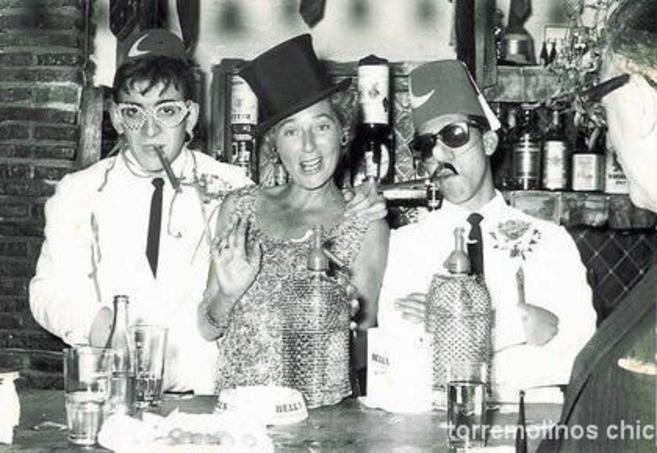
Clientela habitual del pub inglés de Torremolinos poco después de su apertura. TORREMOLINOS CHIC
There are monuments in Torremolinos in the shape of an English pub. With an air very similar to that youthful and carefree tavern drawn by James A. Michener in 'Children of Torremolinos' (The Drifters) in its austere wooden bar and its myriads of exotic bottles, but there is not a barman of color, who is is Sergio, son of Manuel Vega, his first waiter. There was even an Australian pianist. Welcome to The Galloping Major, or the Commander Gallopando, the first and the last one who is still alive from that time. God save the drink. The thousand and one melopeas concentrated in four walls of a place that could easily belong to an alley in the center of Liverpool or to Main Street Gibraltar.
But it is Torremolinos, which was a world leisure and stop mecca of authentic hippies like Brian Jones or Keith Richards and the Yedoes of Eldorado, Sinatra that ended up in the police station for its scandal in the Swordfish or Onassis of tapadillo in the tablao El Jaleo. That is concentrated here contemporaneously. The last vestige. The gap of the Atapuerca of the British tourism. The sixties and seventies, the world-wide descoque in Torremolinos with drinks of dry martini, blody mary, pink gin, Guinness, Jack Daniels, Ginger ale, brandy with Sprite ... This British alcoholic folklore is alive here. So phlegmatic. Supported by that immortal soundtrack of Tom Jones, The Beatles, Gloria Gaynor or Boney M or Modern Talking.
Other customers of the premises in its first season.That nostalgia floats in the air when you cross the threshold of the door and on the wall the photos of another time in black and white, with the incipient cosmopolitanism. And it is that no less than half a century ago of the first English pub on the Costa del Sol, now bored with copies of this and more 'Latinized' substitutes like the Irish. "When I made the first drink orders by phone and said the name of the place, they took me to Güasa," recalls Manuel Vega Trigo, one of the first waiters he had and who later inherited the 'institution', which his son now manages. as owners.
In its first days of 1964 its owners were a wealthy English couple of military descent, hence the name, and that caused in its short stay gatherings of tourists of postín, relatives of the Lloyd Bank or members of the British Royal family, one day Omar Shariff and any other face known but incognito on the coast of the will-o'-the-wisps. «They were very good times, we started three waiters, a pianist and a cleaner. Imagine for such a small pub and it gave us all. Today my son only manages », compares the old Manuel Vega, smiling and joking always in the photos of then.
The pub keeps all the decorations of yesteryear outside and inside, including the two original arms of ceramics and bronze so typical English for throwing beer. "We had to make a fix for the shooting system because then in Spain there was no such thing," he says. "Then also the musical ambience came with the pianist and the records that came to the owner, Edwina Haley, who had a contract with a London record house and we were up to date," he recalls.
Current terrace of the English pub.One day, that one bequeathed him the address of the premises and the inheritance of a clientele that today is preserved almost intact having passed in some cases from father to son. "The English came later and asked me if I was English, when I told them that Spanish, one made me a gesture of demerit. In one of those I went to the mural of the door and with solvent I erased the original name. Then I asked them to do it in Spanish ", tells about the anecdote of a heater that has not made the name in the language of Shakespeare follow other sites of the locality and have an indelible mark on his perfect way of pronouncing in this language.
«I have no complaints from the clientele now. I am delighted even though Torremolinos has changed a lot, the pub remains the same. And I prefer the English before the Spaniards because they know how to thank you and be despite what they drink, "says his son, Sergio who does not hesitate to continue putting those issues of Simply Minds or U2 with which he began to familiarize himself with Now I do not like it. That was music ", he defends and the cosmopolitanism that makes Torremolinos a crossroads of races and cultures unparalleled.
FRANCIS MÁRMOLMálagaActualizado: 21/01/2014 13:07 horas
Hay monumentos en Torremolinos con forma de pub inglés. Con un aire muy similar a aquella taberna juvenil y desenfadada dibujada por James A. Michener en 'Hijos de Torremolinos' (The Drifters) en su austera barra de madera y sus miriadas de botellas exóticas, pero no hay un barman de color, quien está es Sergio, hijo de Manuel Vega, su primer camarero. Hubo hasta un pianista australiano. Welcome to The Galloping Major, o el Comandante Galopando, el primero y el último que sigue vivo de aquella época. God save the drink. Las mil y una melopeas concentradas en cuatro paredes de un local que podría pertenecer sin problema a un callejón del centro de Liverpool o a la Main Street gibraltareña.
Pero es Torremolinos, la que fue meca mundial del ocio y parada de los hippies auténticos como Brian Jones o Keith Richards y de los yeyés de Eldorado, del Sinatra que acabó en comisaría por su escándalo en el Pez Espada o de Onassis de tapadillo en el tablao El Jaleo. Eso se concentra aquí por contemporaneidad. El último vestigio. La sima de la Atapuerca del turismo británico. Los años sesenta y setenta, el descoque mundial en Torremolinos a tragos de dry martini, blody mary, pink gin, Guiness, Jack Daniels, Ginger ale, brandy con Sprite... Aquí está vivo ese folclorismo alcohólico británico. Tan flemático. Soportado por esa banda sonora inmortal de Tom Jones, The Beatles, Gloria Gaynor o Boney M o Modern Talking.
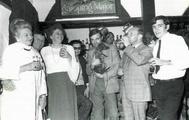
Otros clientes del local en su primera época.
Esa nostalgia flota en el ambiente cuando se cruza el umbral de la puerta y en la pared las fotos de otro tiempo en blanco y negro, con el cosmopolitismo incipiente. Y es que ya hace nada menos que medio siglo del primer pub inglés de la Costa del Sol, ahora aburrida de copias de éste y sucedáneos más 'latinizados' como los irlandeses. «Cuando hacía los primeros pedidos de bebida por teléfono y decía el nombre del local, me tomaban a güasa», recuerda Manuel Vega Trigo, uno de los primeros camareros que tuvo y que luego heredó la 'institución', que ahora maneja su hijo ya como propietarios.
En sus primeros días de 1964 sus dueños eran un adinerado matrimonio inglés de ascendencia militar, de ahí el nombre, y que provocó en su reducida estancia tertulias de turistas de postín, familiares de la banca Lloyd o miembros de la familia Real Británica, un día Omar Shariff y cualquier otro otra cara conocida pero de incógnito en la costa de los fuegos fatuos. «Fueron muy buenos tiempos, empezamos tres camareros, un pianista y una limpiadora. Imagínate para un pub tan pequeño y nos daba para todos. Hoy se apaña mi hijo sólo», compara el viejo Manuel Vega, sonriente y bromista siempre en las fotos de entonces.
El pub guarda toda la decoración de antaño fuera y dentro, incluso los dos brazos originales de cerámica y bronce tan típicos ingleses para tirar la cerveza. «Hubo que hacer un apaño para el sistema de tiro porque entonces en España no había de estas cosas», cuenta. «Luego también la ambientación musical llegaba con el pianista y los discos que le llegaban a la dueña, Edwina Haley, que tenía un contrato con una casa de discos londinense y estábamos a la última», rememora.
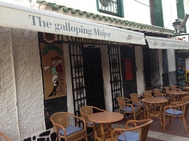
Terraza actual del pub inglés.
Un buen día, aquella le legó la dirección del local y la herencia de una clientela que hoy se conserva casi intacta al haber pasado en algunos casos de padres a hijos. «Llegaban los ingleses después y me preguntaban si era inglés, al decirles que español, uno me hizo un gesto de demérito. En una de aquellas salí al mural de la puerta y con disolvente le borré el nombre original. Luego yo mismo pedí que me lo hicieran en castellano», relata sobre la anécdota de un calentón que no le ha hecho que el nombre en el idioma de Shakespeare siga por otros sitios del local y tenga marca indeleble en su perfecta forma de pronunciar en esta lengua.
«No tengo ninguna queja de la clientela de ahora. Estoy encantado pese a que Torremolinos ha cambiado mucho, el pub sigue igual. Y prefiero a los ingleses antes que a los españoles porque saben darte las gracias y estar pese a lo que beben», refiere su hijo, Sergio que no duda en seguir poniendo esos temas de Simply Minds o U2 con los que empezó a familiarse hacca de ahora no me gusta. Eso era música», defiende y en él confluye ese cosmopolitismo que hace de Torremolinos un cruce de razas y culturas sin parangón.
More pictures of the Galloping Major .
The major keeps galloping

FRANCISCO LANCHA
Saturday, December 18 2010, 02:41
In the golden age of the Costa del Sol, one of the most popular catering establishments in Torremolinos was on María Barrabino street. It was opened by Edwina Harley, in February 1964. We refer to the Galloping Major, a bar of drinks in the style of the old English pubs that have always ruled the British lands. Later, this bar would change ownership and would pass into the hands of Manuel Vega Trigo in 1980, a Ceuta born in 1946 and came to land in Torremolinos in 1963 to work as a waiter at the Panorama Hotel, an establishment that was located in Calle de las Mercedes, which goes down to the beach of Bajondillo, and a year later began working as a waiter in the Galloping Major.
Its location, as we said before, on María Barrabino street, made it rub shoulders with other important nightclubs such as El Dorado, Tina's Bar or restaurants like the black lantern, owned by a famous Swedish actor who would later become in consul of his country, and that became refuge of journalists and photographers who covered the events of the Costa del Sol. But of all these the only one still standing is the Galloping Major.
In the first trots of this establishment it was reaping great fame among the locals of Torremolinos, becoming so famous that it was frequented by members of the British royal family, as well as, a multitude of famous actors and musicians worldwide.
The atmosphere of the English pub is still maintained today, keeping the same structure and furniture with which it was opened. According to Manuel Vega, the pub has not closed even one day since its inauguration. The 'commander' has to support more riders, because Manuel Vega Trigo, has included members of his family in the payroll of the business, making this 'horse' have English skin but Spanish heart.
This corner of the old district of Malaga and now municipality of Torremolinos is part of one of the many historical places that it has, where the old town hall is located as well as the first market that was in Torremolinos and that was later transformed in municipal dependencies.
FRANCISCO LANCHASábado, 18 diciembre 2010, 02:41
En la época dorada de la Costa del Sol, uno de los establecimientos hosteleros más populares de Torremolinos se encontraba en la calle María Barrabino. Lo abrió Edwina Harley, en febrero de 1964. Nos referimos al Galloping Major, bar de copas al estilo de los viejos pub ingleses que han reinado desde siempre las tierras británicas. Más adelante, este bar cambiaría de dueño y pasaría a manos de Manuel Vega Trigo en el año 1980, un ceutí nacido en 1946 y que llegó a tierras torremolinenses en el año 1963 para trabajar como camarero en el hotel Panorama, establecimiento que se encontraba en la calle de las Mercedes, vía que baja hasta la playa del Bajondillo, y que un año más tarde comenzaría a trabajar como camarero en el Galloping Major.
Su ubicación, como ya dijimos antes, en la calle María Barrabino, hizo que se codeara con otras importantes salas de fiestas como El Dorado, el Tina's Bar o restaurantes como el farol negro, propiedad de un actor famoso actor sueco que más tarde se convertiría en cónsul de su país, y que se convirtió en refugio de periodistas y fotógrafos que cubrían los acontecimientos de la Costa del Sol. Pero de todos estos el único que todavía sigue en pie es el Galloping Major.
En los primeros trotes de este establecimiento fue cosechando gran fama entre los locales de Torremolinos, llegando a ser tan famoso que fue frecuentado por miembros de la familia real británica, así como, multitud de actores y músicos famosos mundialmente.
La ambientación de pub inglés, se sigue manteniendo en la actualidad, conservando la misma estructura y mobiliario con el que se abrió. Según nos ha contado Manuel Vega el pub no ha cerrado ni un solo día desde su inauguración. El 'comandante' tiene que sostener más jinetes, por que Manuel Vega Trigo, ha incluido en la nómina del negocio a miembros de su familia, haciendo que este 'caballo' tenga piel inglesa pero corazón español.
Este rincón de la antigua barriada malagueña y ahora municipio de Torremolinos forma parte de uno de los muchos lugares históricos con que cuenta la misma, donde se ubica el antiguo ayuntamiento así como el primer mercado que hubo en Torremolinos y que se transformó, más tarde, en dependencias municipales.
another article
OCIO La primera taberna inglesa de la Costa del Sol lleva 50 años abierta
Medio siglo 'galopando' a lomos del primer pub inglés de Torremolinos
'The Galloping Major' mantiene en su local de Torremolinos la esencia de típica taberna inglesa con la que abrió sus puertas
En sus primeros días de 1964 sus dueños eran un adinerado matrimonio inglés de ascendencia militar
La ambientación musical se basaba en el pianista y los discos que le llegaban a la dueña, que tenía un contrato con una casa de discos londinense
Clientela habitual del pub inglés de Torremolinos poco después de su apertura. TORREMOLINOS CHIC
There are monuments in Torremolinos in the shape of an English pub. With an air very similar to that youthful and carefree tavern drawn by James A. Michener in 'Children of Torremolinos' (The Drifters) in its austere wooden bar and its myriads of exotic bottles, but there is not a barman of color, who is is Sergio, son of Manuel Vega, his first waiter. There was even an Australian pianist. Welcome to The Galloping Major, or the Commander Gallopando, the first and the last one who is still alive from that time. God save the drink. The thousand and one melopeas concentrated in four walls of a place that could easily belong to an alley in the center of Liverpool or to Main Street Gibraltar.
But it is Torremolinos, which was a world leisure and stop mecca of authentic hippies like Brian Jones or Keith Richards and the Yedoes of Eldorado, Sinatra that ended up in the police station for its scandal in the Swordfish or Onassis of tapadillo in the tablao El Jaleo. That is concentrated here contemporaneously. The last vestige. The gap of the Atapuerca of the British tourism. The sixties and seventies, the world-wide descoque in Torremolinos with drinks of dry martini, blody mary, pink gin, Guinness, Jack Daniels, Ginger ale, brandy with Sprite ... This British alcoholic folklore is alive here. So phlegmatic. Supported by that immortal soundtrack of Tom Jones, The Beatles, Gloria Gaynor or Boney M or Modern Talking.
Other customers of the premises in its first season.That nostalgia floats in the air when you cross the threshold of the door and on the wall the photos of another time in black and white, with the incipient cosmopolitanism. And it is that no less than half a century ago of the first English pub on the Costa del Sol, now bored with copies of this and more 'Latinized' substitutes like the Irish. "When I made the first drink orders by phone and said the name of the place, they took me to Güasa," recalls Manuel Vega Trigo, one of the first waiters he had and who later inherited the 'institution', which his son now manages. as owners.
In its first days of 1964 its owners were a wealthy English couple of military descent, hence the name, and that caused in its short stay gatherings of tourists of postín, relatives of the Lloyd Bank or members of the British Royal family, one day Omar Shariff and any other face known but incognito on the coast of the will-o'-the-wisps. «They were very good times, we started three waiters, a pianist and a cleaner. Imagine for such a small pub and it gave us all. Today my son only manages », compares the old Manuel Vega, smiling and joking always in the photos of then.
The pub keeps all the decorations of yesteryear outside and inside, including the two original arms of ceramics and bronze so typical English for throwing beer. "We had to make a fix for the shooting system because then in Spain there was no such thing," he says. "Then also the musical ambience came with the pianist and the records that came to the owner, Edwina Haley, who had a contract with a London record house and we were up to date," he recalls.
Current terrace of the English pub.One day, that one bequeathed him the address of the premises and the inheritance of a clientele that today is preserved almost intact having passed in some cases from father to son. "The English came later and asked me if I was English, when I told them that Spanish, one made me a gesture of demerit. In one of those I went to the mural of the door and with solvent I erased the original name. Then I asked them to do it in Spanish ", tells about the anecdote of a heater that has not made the name in the language of Shakespeare follow other sites of the locality and have an indelible mark on his perfect way of pronouncing in this language.
«I have no complaints from the clientele now. I am delighted even though Torremolinos has changed a lot, the pub remains the same. And I prefer the English before the Spaniards because they know how to thank you and be despite what they drink, "says his son, Sergio who does not hesitate to continue putting those issues of Simply Minds or U2 with which he began to familiarize himself with Now I do not like it. That was music ", he defends and the cosmopolitanism that makes Torremolinos a crossroads of races and cultures unparalleled.
FRANCIS MÁRMOLMálagaActualizado: 21/01/2014 13:07 horas
Hay monumentos en Torremolinos con forma de pub inglés. Con un aire muy similar a aquella taberna juvenil y desenfadada dibujada por James A. Michener en 'Hijos de Torremolinos' (The Drifters) en su austera barra de madera y sus miriadas de botellas exóticas, pero no hay un barman de color, quien está es Sergio, hijo de Manuel Vega, su primer camarero. Hubo hasta un pianista australiano. Welcome to The Galloping Major, o el Comandante Galopando, el primero y el último que sigue vivo de aquella época. God save the drink. Las mil y una melopeas concentradas en cuatro paredes de un local que podría pertenecer sin problema a un callejón del centro de Liverpool o a la Main Street gibraltareña.
Pero es Torremolinos, la que fue meca mundial del ocio y parada de los hippies auténticos como Brian Jones o Keith Richards y de los yeyés de Eldorado, del Sinatra que acabó en comisaría por su escándalo en el Pez Espada o de Onassis de tapadillo en el tablao El Jaleo. Eso se concentra aquí por contemporaneidad. El último vestigio. La sima de la Atapuerca del turismo británico. Los años sesenta y setenta, el descoque mundial en Torremolinos a tragos de dry martini, blody mary, pink gin, Guiness, Jack Daniels, Ginger ale, brandy con Sprite... Aquí está vivo ese folclorismo alcohólico británico. Tan flemático. Soportado por esa banda sonora inmortal de Tom Jones, The Beatles, Gloria Gaynor o Boney M o Modern Talking.
Otros clientes del local en su primera época.
Esa nostalgia flota en el ambiente cuando se cruza el umbral de la puerta y en la pared las fotos de otro tiempo en blanco y negro, con el cosmopolitismo incipiente. Y es que ya hace nada menos que medio siglo del primer pub inglés de la Costa del Sol, ahora aburrida de copias de éste y sucedáneos más 'latinizados' como los irlandeses. «Cuando hacía los primeros pedidos de bebida por teléfono y decía el nombre del local, me tomaban a güasa», recuerda Manuel Vega Trigo, uno de los primeros camareros que tuvo y que luego heredó la 'institución', que ahora maneja su hijo ya como propietarios.
En sus primeros días de 1964 sus dueños eran un adinerado matrimonio inglés de ascendencia militar, de ahí el nombre, y que provocó en su reducida estancia tertulias de turistas de postín, familiares de la banca Lloyd o miembros de la familia Real Británica, un día Omar Shariff y cualquier otro otra cara conocida pero de incógnito en la costa de los fuegos fatuos. «Fueron muy buenos tiempos, empezamos tres camareros, un pianista y una limpiadora. Imagínate para un pub tan pequeño y nos daba para todos. Hoy se apaña mi hijo sólo», compara el viejo Manuel Vega, sonriente y bromista siempre en las fotos de entonces.
El pub guarda toda la decoración de antaño fuera y dentro, incluso los dos brazos originales de cerámica y bronce tan típicos ingleses para tirar la cerveza. «Hubo que hacer un apaño para el sistema de tiro porque entonces en España no había de estas cosas», cuenta. «Luego también la ambientación musical llegaba con el pianista y los discos que le llegaban a la dueña, Edwina Haley, que tenía un contrato con una casa de discos londinense y estábamos a la última», rememora.
Terraza actual del pub inglés.
Un buen día, aquella le legó la dirección del local y la herencia de una clientela que hoy se conserva casi intacta al haber pasado en algunos casos de padres a hijos. «Llegaban los ingleses después y me preguntaban si era inglés, al decirles que español, uno me hizo un gesto de demérito. En una de aquellas salí al mural de la puerta y con disolvente le borré el nombre original. Luego yo mismo pedí que me lo hicieran en castellano», relata sobre la anécdota de un calentón que no le ha hecho que el nombre en el idioma de Shakespeare siga por otros sitios del local y tenga marca indeleble en su perfecta forma de pronunciar en esta lengua.
«No tengo ninguna queja de la clientela de ahora. Estoy encantado pese a que Torremolinos ha cambiado mucho, el pub sigue igual. Y prefiero a los ingleses antes que a los españoles porque saben darte las gracias y estar pese a lo que beben», refiere su hijo, Sergio que no duda en seguir poniendo esos temas de Simply Minds o U2 con los que empezó a familiarse hacca de ahora no me gusta. Eso era música», defiende y en él confluye ese cosmopolitismo que hace de Torremolinos un cruce de razas y culturas sin parangón.
More pictures of the Galloping Major .


